
Article: Who collects the plastic in our bags? Inside India's waste picker economy
Who collects the plastic in our bags? Inside India's waste picker economy
Every Re.27 Daypack gives 27 plastic bottles a new life. Before those bottles become yarn, someone picks them up. In India, that someone is usually a waste picker: a person who earns a living by collecting, sorting and selling what other people throw away. This article is about them. Who they are, how the system works, and what a fair trade partner can and cannot change.
India's recycling runs on people
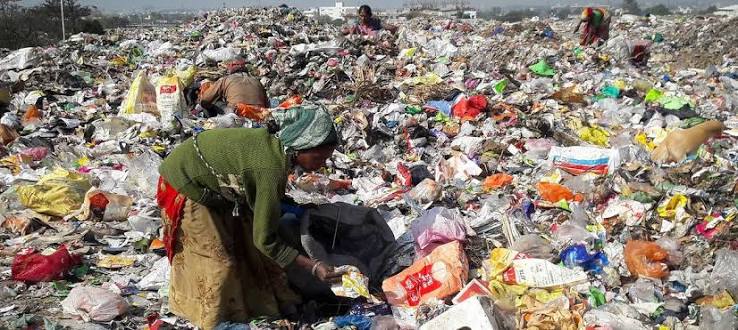
Most plastic recycling in India does not start with a truck or a sorting machine. It starts with people on foot, with sacks and handcarts, working streets, dumpsites and apartment blocks.
Estimates for the number of waste pickers in India range from 1.5 to 4 million (Forum Umwelt und Entwicklung, 2024). Worldwide, the figure most often quoted is around 15 million. The Alliance to End Plastic Waste estimates that around 80% of plastic collection in India relies on this informal sector.
Informal means exactly that. Most waste pickers have no contract, no fixed wage and no protective equipment. They sell what they collect to small scrap dealers, who sell on to larger aggregators, who sell to recyclers. The price at the bottom of that chain moves with the market, and waste pickers carry most of the risk when it drops.
What waste pickers collect
Waste pickers collect what someone will pay for. PET bottles, the clear plastic used for water and soft drinks, are one of the materials this system recovers best.
A 2017 study by the CSIR National Chemical Laboratory, released together with the industry group PACE, estimated that around 90% of PET in India was recovered: about 65% recycled at registered facilities, 15% in the unorganised sector and 10% reused at home. It is an older figure, backed by an industry body, and it counts reuse as well as recycling. Still, the direction is clear. In India, a used PET bottle rarely goes unnoticed.
What that means for "ocean-bound plastic"
This is the honest part. Ocean-bound plastic is plastic in coastal areas that is at risk of reaching the sea if nobody manages it. If India's waste pickers already recover most PET bottles, then a recycled bag cannot simply claim that every bottle in it would otherwise have ended up in the ocean. For many bottles, that is not the full picture.
The more useful question is a different one: who did the work, and on what terms? That is where a collection partner makes a real difference.
Our collection engine: Plastics For Change
The plastic in our supply chain is collected through Plastics For Change, a social enterprise based in Bengaluru. It connects waste pickers and local scrap dealers to brands that want traceable recycled plastic.
Plastics For Change says its model aims to give waste pickers a fair price, a more predictable income and better working conditions, plus access to support such as healthcare, education and financial loans. According to the organisation, many of the waste pickers it works with come from communities that face caste discrimination.
Several things about Plastics For Change can be checked independently:
- It was the first plastic recycler verified by the World Fair Trade Organization (WFTO). WFTO verification checks an organisation against the 10 Principles of Fair Trade, which include paying a fair price, no child labour or forced labour, and good working conditions.
- It is a certified Ocean Bound Plastic collection organisation, under the OBP scheme run by Zero Plastic Oceans with Control Union Certifications.
- It is a certified B Corp, and reports being the first organisation certified under the Social+OBP standard, in February 2024.
What we can and cannot claim
Certification is where many brands round up. We would rather be precise.
- The Ocean Bound Plastic certification sits at supply chain level, with our partner. The BlueWave Collective as a brand does not hold it yet. Brand-level certification is a goal we are working towards, not something we have.
- The fair trade verification belongs to Plastics For Change, not to us. Our bags do not carry a fair trade label.
- We cannot tell you the name of the person who picked up the bottles in your backpack. We can tell you which partner's system they came through, and what that system is checked against.
That is less than a perfect story. It is also a true one.
What changes when collection is fair
India has started to recognise waste pickers in policy. The Solid Waste Management Rules of 2016 require states and union territories to create pathways that bring the informal sector into the waste value chain (Centre for Science and Environment). How far that has reached the street varies a lot from city to city.
Brands can move faster than policy in one specific way: by choosing where they buy. When a brand pays for recycled plastic from a verified fair trade supply chain, more of that money reaches the people at the start of the chain, on better terms. It does not fix the informal economy. It makes one supply chain inside it more stable and more visible.
That is why we work this way. Not because it makes a bag perfect, but because the people who do the first and hardest step should not carry all the risk.
From bottle to bag
After collection, bottles are sorted, cleaned, shredded into flakes and melted into pellets. The pellets are spun into yarn and woven into fabric for bags like the Re.27 Daypack. The name carries the number: Re.27 stands for 27 plastic bottles. It has room for your laptop, lunch and an extra layer, and a water-resistant coating for the days the weather changes its mind.
Every model in the backpack collection carries its own bottle count in its name. And if you want to know how our partnership started, read the story behind our collection (currently in Dutch).
Frequently asked questions
How many waste pickers are there in India?
Estimates range from 1.5 to 4 million. Because the work is informal, nobody counts it precisely.
Is ocean-bound plastic the same as ocean plastic?
No. Ocean plastic has already reached the sea. Ocean-bound plastic is collected on land, in coastal areas, before it gets there.
Are BlueWave bags fair trade certified?
No. Our collection partner Plastics For Change is verified by the World Fair Trade Organization. The bags themselves carry no fair trade label, and we do not present them as if they do.

